Understanding the difference between flow rate and volume is essential, whether you're dosing reagents, filling containers, or transferring fluids through a closed system. Too often, choosing equipment is based on just one of these values, leading to oversized systems and process inefficiencies. This article breaks down the difference between flow rate and volume, explains why both are critical to your process, and outlines how to choose the right fluid handling equipment to meet your needs.
Flow Rate vs. Volume: What’s the Difference?
What is Volume?
Volume refers to the total amount of fluid moved or contained, typically expressed in liters (L), milliliters (mL), or gallons (gal). This measurement is critical for applications involving batch processing or total dispense volumes.
What is Flow Rate?
Volumetric flow rate is the speed at which a specified volume of substance moves, typically expressed in mL/min, L/hour, or gallons per minute (GPM). It is a time-based measurement essential for continuous processes such as filtration, inline dosing, or perfusion.
Mass flow rate measures the actual quantity of liquid or gas moving through a system in a certain amount of time, expressed in kilograms per second (kg/s) or standard liters per minute (SLPM). Unlike volumetric flow, mass flow remains constant even when pressure and temperature fluctuate. Read our blog post on the Introduction to Flowmeters to learn more about volumetric vs. mass flow.
Why the Distinction Matters
Confusing volume and flow rate can result in using the wrong equipment. For instance, if your process requires dispensing 500 mL over 10 minutes, the right solution needs to support a flow rate of 50 mL/min, not just the ability to handle 500 mL total volume. Matching equipment performance to the actual need prevents inaccuracies and over-engineering.

Key Factors That Influence Flow Rate and Volume Requirements
When determining your system's fluid handling needs, it’s not enough to define a target flow rate or total volume. Several physical and operational variables can influence how fluid behaves in your system. Understanding these factors will help ensure efficient operation and better overall process control.
1. Fluid Viscosity and Temperature
Viscosity measures a fluid's resistance to flow. Thicker fluids like syrups or slurries require more force to move than low-viscosity fluids like water or solvents.
- Effect on Flow Rate: High-viscosity fluids may flow slower than expected, even when using high-capacity pumps. To maintain the desired flow rate, you may need a stronger pump or wider tubing.
- Design Considerations: Choose a pump type suited to viscous fluids, such as peristaltic pumps with high torque or adjustable speed control.
2. Temperature
Fluid temperature directly affects viscosity and can impact system pressure, component compatibility, and flow behavior.
- Effect on Flow Rate: Warmer fluids tend to flow more easily (lower viscosity), while cooler fluids can thicken and resist flow.
- Design Considerations: Select tubing and pump materials rated for your fluid’s operating temperature range. Watch for thermal expansion in tubing, which can impact flow consistency.
3.Tubing Inner Diameter (ID) and Wall Thickness
Tubing dimensions act as the delivery path for your fluid and are a major determinant of achievable flow rate.
- Effect on Flow Rate: A larger inner diameter allows more fluid to pass through per unit time, increasing maximum flow rate. However, a tube that is too large may reduce precision at low flow rates.
- Wall Thickness: Thicker tubing walls offer more durability and pressure resistance, but can reduce tubing flexibility, which is important in peristaltic pump applications.
- Design Tip: Use Cole-Parmer's Tubing Size Guide to select the optimal tubing for your system.
4.Pressure Requirements (Inlet, Outlet, and System Backpressure)
Pressure is a critical but often overlooked variable that directly influences fluid flow. Pressure dynamics will affect the flow rate and system stability, whether you're pushing fluid through a long length of tubing, across an inline filter, or into a pressurized vessel.
- Inlet Pressure: Low or negative inlet pressure may lead to cavitation or inconsistent priming.
- Outlet Pressure/Backpressure: Resistance downstream (e.g., through filters, valves, or elevation changes) reduces flow rate and may require a more powerful pump.
- Design Considerations: Minimize vertical lift or use flooded suction designs. To monitor system performance, consider using pressure-rated tubing, flow control components, and inline pressure sensors.
5.Tubing Length and System Layout
The overall length of tubing and complexity of your layout can also impact flow.
- Effect on Flow Rate: Longer tubing runs, elevation changes, the number of bends, and sharp turns introduce frictional losses, reducing actual flow.
- Design Tip: Minimize tubing length where possible, use gentle curves instead of sharp bends, and avoid unnecessary restrictions.
Choosing the Right Equipment: Matching Flow Rate or Volume Needs
Peristaltic Pumps
Peristaltic pumps move fluid by compressing flexible tubing, moving a fixed volume with each rotor rotation. They excel at delivering repeatable flow rates and precise volumes.
- Ideal for continuous or batch processes
- Excellent for viscous or shear-sensitive fluids
- Easily change tubing size if a different flow rate is required
Featured Product:
Watson-Marlow 323Du/DW Peristaltic Pump System — Modular and flexible system with MemoDose allows you to dispense a set quantity each time.
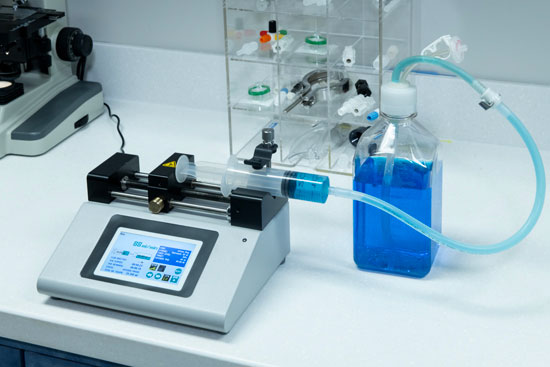
Syringe Pumps
Syringe pumps offer highly accurate, low-flow delivery of fluids, making them perfect for precise dosing applications.
- Accurate flow control for small volumes
- Programmable for complex sequences
Featured Product:
Legato® 111 Dual Infusion/Withdrawal Programmable Syringe Pump — Consistent dual syringe performance features two 50-step programs for repeated dosing.
Flowmeters
Flowmeters measure the real-time rate of a substance movement through a system. They're essential for confirming system performance, detecting blockages, and providing process traceability.
- Wide range of designs to measure liquids or gases
- Models available with built-in valves to measure and control
Featured Products:
Cole-Parmer 150 mm Variable Area Flowmeter — Simple, easy-to-use flowmeters designed for precise low flow rate measurements of air and water in mL/minute.
Alicat MC-Series SLPM Mass Flow Controllers — Accurate, real-time mass and volumetric flow readings capable of measuring and controlling flow generated by both positive pressure and suction.
Unit Conversion Resources from Cole-Parmer
Fluid handling applications often require converting between units. Whether switching between gallons and liters or calculating how long it will take to transfer a set volume, accurate conversions are essential to design your system properly.
Helpful Cole-Parmer Common Unit Converters:
Common Mistakes and How to Avoid Them
Understanding flow rate and volume is only part of the equation. These common pitfalls can lead to errors or inefficiencies:
- Assuming “maximum” flow rates are sustainable: Specified maximum flow rates are only achievable under ideal conditions. Relying on those values without considering real-world variables can lead to underperformance.
- Neglecting startup and ramp-up flow behavior: Some fluids and systems require time to reach steady-state flow. Ignoring this can lead to inaccurate dosing or improper system priming during short run cycles.
- Overlooking dead volume in system design: Fittings, valves, and tubing transitions can trap fluid, delaying delivery or creating residual volume that skews batch accuracy, especially in small-volume applications.
- Lack of Calibration: Flow rate can drift due to tubing wear, temperature fluctuations, or system changes. Small changes can lead to significant errors without periodic calibration or real-time monitoring.
Flow vs. Volume—Know Before You Flow
In fluid handling, understanding the difference between how much you need to move (volume) and how fast it needs to happen (flow rate) is the foundation for choosing the right tools. Whether you're designing a process for the lab, plant, or production floor, Cole-Parmer offers the conversion tools, equipment, and technical support you need to get it right.


