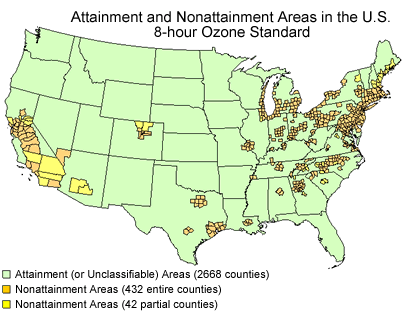
On April 15, 2004, the Environmental Protection Agency (EPA) notified 31 governors that areas of their states do not meet new health standards for ground-level ozone. In total, part or all of 474 counties nationwide are in nonattainment for either failing to meet the EPA's 8-hour ozone standard or for causing a downwind county to fail.
Although the vast majority of counties–2,668–meet the new standards, more than
159 million people live in areas that do not. As a result, the EPA simultaneously issued a new rule classifying areas by the severity of their ozone conditions and establishing the deadline state and local governments must meet to reduce ozone levels.
"This isn't about the air getting dirtier," said EPA Administrator Mike Leavitt. "The air is getting cleaner. These new rules are about our new understanding of health threats; about our standards getting tougher and our national resolve to meet them."
Measures that states and localities–and local industry–may be required to take to control ozone pollution are expected to include stricter controls on emissions from industrial facilities, additional planning requirements for transportation sources, and programs like gasoline vapor recovery controls.
"These ozone standards are strong medicine," Administrator Leavitt wrote the governors. "As a former Governor of Utah, I recognize that having parts of your state designated as being in nonattainment will require more actions on your part to achieve cleaner, healthier air. We need to work together to make certain your state can, as others have in the past, clean the air while sustaining economic growth."
Deadlines for meeting the 8-hour ozone standard range from 2007 to 2021, depending on the severity of an area's ozone problem. For example, areas with more significant amounts of ground-level ozone, such as Los Angeles, may have to apply more rigorous control measures, but will have a longer time to meet the ozone standards
Thirty areas voluntarily entered into Early Action Compacts (EACs) in 2002, agreeing to have a plan in place to reduce air pollution about two years sooner than required by the Clean Air Act. These communities have had their nonattainment status deferred as a result. These areas must attain the new ozone standard no later than December 31, 2007, and must submit satisfactory progress reports to retain their EAC status.
The 8-hour ozone standard, 0.08 parts per million (ppm) averaged over eight hours, replaces the 1-hour standard that had been in place since 1979. The 8-hour standard was issued in 1997 after a significant body of research showed that longer-term exposure to lower levels of ozone can also affect human health. Implementation of the new standard was held up by a lengthy legal battle.
Additional information about the Clean Air Rules of 2004 is available at: http://www.epa.gov/cleanair2004. For a full listing of EPA's designations of state and tribal areas go to: http://www.epa.gov/ozonedesignations.


