Cole-Parmer® Incubators
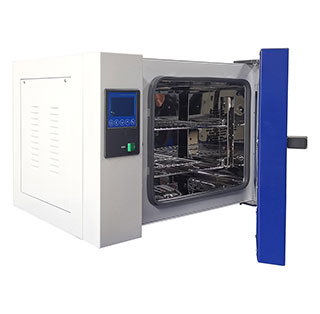
- Complete line of general- purpose incubators
- Heavy-duty construction with stainless steel interiors
- Temperature sensor located for optimal sensitivity
- Choice of heat convection techniques
- Easy-to-clean interiors and exteriors
Advantages
Incubators provide a controlled, protective setting for cell, tissue cultures, and other samples that require a contamination-free contained environment.
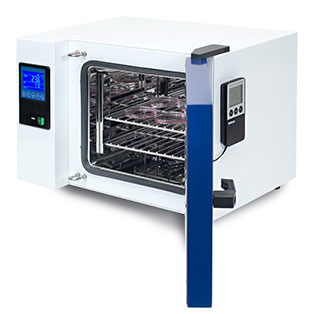
We have a wide variety of lab incubators. Many are equipped with see-through doors to view the entire chamber without opening the door and affecting temperature stability.
If you have limited space or would like an incubator for personal use, then we have a selection of incubators for you!
Applications
Incubators are used for growing a variety of life forms. Fruit flies, fish eggs, bacteria and virus are just a few of the things grown in incubators. An essential research tool, general- purpose incubators are probably some of the most frequently used controlled temperature devices found in the laboratory.
General-purpose incubators are used in both biomedical and industrial applications. In the biomedical area, applications such as bacteriological studies, serum work, fixation and enzyme tests, storage of blood agar plates and tissue culture studies, and fungi and mold growth investigations are a few of the uses for general-purpose incubators. Industrial applications include storage, entomology, package testing, stability and stress testing, and biological oxygen demand experiments.
General-Purpose Incubators
Gravity Convection Incubators
INC-400G Series
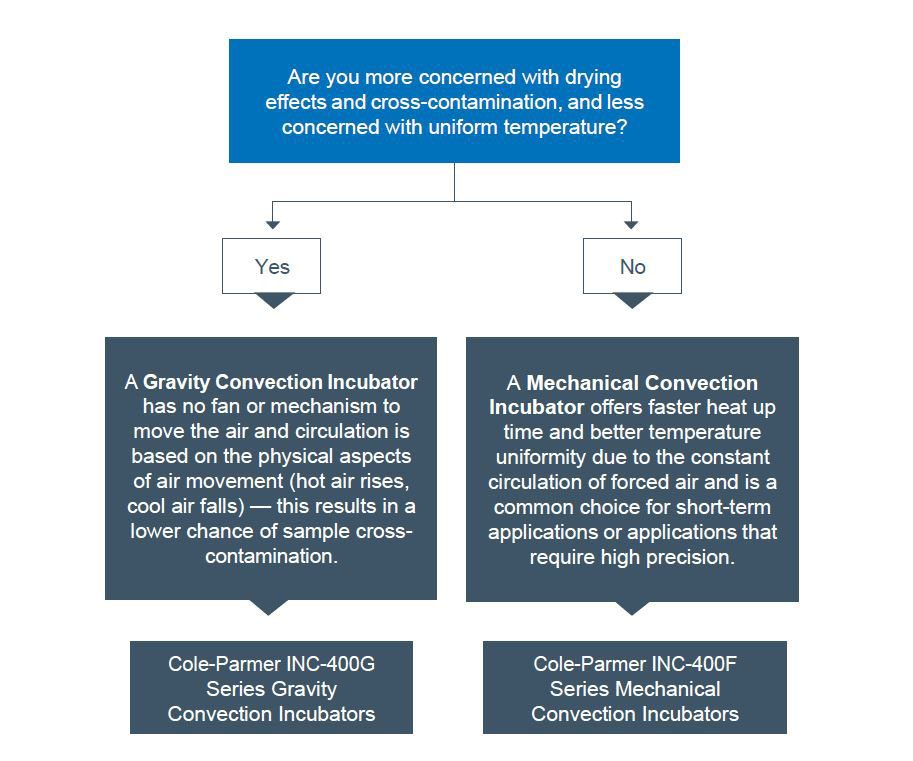
Gravity convection allows heat to fill the chamber naturally, providing a lower chance of cross- contamination between samples. These gravity convection incubators have a temperature range from ambient +5 ºC to 65 ºC. The inner chamber is constructed of stainless steel with a round, curved inner angle for quick cleaning. The antiskid shelf design is easy to use with a single hand. Smaller models have a large glass observation window while larger models have an internal glass door. Glass doors avoid unnecessary heat dissipation and temperature changes when samples need to be viewed.
Easy-to-view LCD shows time, set temperature, actual temperature, running status, and fan status. Safety features include auto-start after power loss/return, temperature deviation alarm, overtemperature set point alarm, and overcurrent protection.
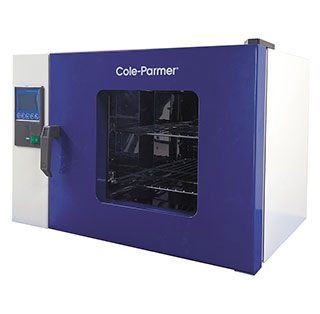 | Models: 5 models available
Chamber capacity: 16 to 210 liters (0.57 to 7.4 cu ft)
Temperature display: LCD
Maximum temperature: 65 ºC Minimum temperature: Ambient +5 ºC
Temperature controller: PID |
General-Purpose Incubators
Mechanical Convection Incubators
INC-400F Series
Mechanical convection offers faster heat up and better temperature uniformity and recovery due to the constant circulation of forced air. These mechanical convection incubators have a temperature range from ambient +5 ºC to 65 ºC. The inner chamber is constructed of stainless steel with a round, curved inner angle for quick cleaning. The antiskid shelf design is easy to use with a single hand. Smaller models have a large glass observation window while larger models have an internal glass door. Glass doors avoid unnecessary heat dissipation and temperature changes when samples need to be viewed.
Easy-to-view LCD shows time, set temperature, actual temperature, running status, and fan status. Safety features include auto-start after power loss/return, temperature deviation alarm, overtemperature set point alarm, and overcurrent protection.
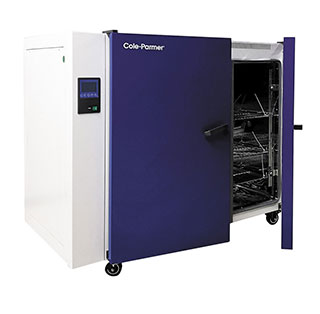 | Models: 7 models available
Chamber capacity: 16 to 420 liters (0.57 to 14.8 cu ft)
Temperature display: LCD
Maximum temperature: Ambient +5 ºC
Temperature controller: PID |
Choosing the Correct Incubator for Your Application
Cole-Parmer General-Purpose Incubators are available in a wide range of sizes, features, and performance characteristics. Here are some factors to consider to help you choose the Cole-Parmer incubator best suited for your specific applications.
What temperature do you need to control?
Cole-Parmer Incubators are available in non- refrigerated models. The lowest temperature a “heat only” incubator can reach is +5 °C above ambient.
How uniform must chamber temperature be?
Temperature uniformity is affected by both the type of temperature control used and the heat convection technique. Temperature uniformity is generally better in incubators using microprocessor temperature controllers and/or mechanical convection.
How large must the chamber be?
Naturally, the larger the chamber, the greater the external dimensions as well, so it’s always a good idea to also determine if there are any external size restrictions before making a specific recommendation.
How fully is the chamber loaded?
In general, mechanical convection models are recommended if the chamber is going to be loaded to 50% or more of capacity because there is greater heated airflow within the chamber. Heated air moves between samples to provide optimal temperature uniformity.
How sensitive are the samples to airflow?
Gravity/natural convection models are best suited for heating samples which are sensitive to airflow.


