The Reality of Cannabis Testing: Thinking Outside the Bud
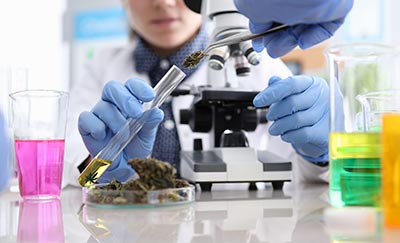
It seems that every week new information is being released about the regulation of cannabis in the United States. Recently, with the legislation opening a new agricultural and testing industry around cannabis, labs are now on the forefront of testing and legislation. The science and regulatory communities are now defining the roles and targets for testing in this new industry, as well as redefining global testing strategies for testing harmonization all over the world. The legalization of cannabis in certain states has started a gold rush of growing facilities and testing labs all trying to shape law and regulation out of what previously was an unregulated, illegal product.
Scope of testing
The scope of testing for these new products goes far beyond the traditional bud and inhalable product. In the beginning, laboratories were tasked mostly with the traditional plant materials for cannabinoid potency. Now, testing has expanded from inhalable products to many other forms such as edibles, tinctures, concentrates, and topicals. The largest growing segment of cannabis products are the edibles.
The emergence of edible products further complicates the sample preparation and testing process. Many labs are following or mimicking traditional agricultural testing methods to test their products, but these methods have yet to be validated across the cannabis industry. The lack of common methodology makes it difficult for all the laboratories involved to operate with the same level of competency.
In traditional accredited laboratories, there are established methods for testing and validation. Laboratories undergo audits to determine accuracy and proficiency. In this largely unregulated world of cannabis testing, those methods and regulations are still evolving.
Target analytes
The list of target analytes is also constantly evolving and expanding. Labs are not only analyzing cannabinoids, but also other targets such as mycotoxins, aflatoxins, microbial contamination, pesticides, heavy metals, residual solvents, and terpenes. The industry is now concerned about safety as well as potency. The question is no longer “is it legal?” but has evolved to become “is it safe?”. Many states, such as Nevada, Oregon and California, are becoming increasingly concerned with the safety of cannabis and are developing standards to measure these additional contaminants.
About terpenes
For the cannabis growers, dispensaries and consumers, additional components which contribute to the unique characters of each strain of cannabis, are becoming increasingly important. Patients are beginning to ask for cannabis products for specific health benefits like sleep, or to combat pain. Some dispensaries blend cannabis products to create flavor profiles like the way brewer’s combine varieties of hops in beer. Different strains are branded with health benefits, fragrances or pleasant flavors. Most of these attributes are derived from the terpene profiles present within each strain.
Terpenes are a large, varied class of strong-smelling compounds usually associated with plants and other botanicals. Terpenes are hydrocarbons while their associated terpenoids (also known as isoprenoids) are terpenes that have some rearrangement or oxidation to create assorted functional groups such as alcohols, esters, etc. Historically terpenes, through essential oils and botanicals, have been used in holistic practices and aromatherapy.
In nature, terpenes are found in many common plants including hops and cannabis. Since cannabis and beer hops are both part of the Cannabaceae family, it is not hard to see why terpene analysis of cannabis would be of interest.
Many consumer products, including perfume, flavorants, wine, and beer are dependent upon terpenes for the character, flavor and fragrances they impart upon their products. The flavor and aroma of hops are critical to beer, especially Myrcene, beta-Pinene, beta-Caryophyllene, and alpha-Humulene. The floral notes of wine grapes can be traced back to terpenoid compounds, such as Damascene and Geraniol, which are also found in roses.
Terpene profiles are used to characterize and fingerprint different varieties of cannabis for specific therapeutic benefits appropriate for a range of medical conditions. Terpenes, such as beta-Myrcene and Nerolidol, have sedative properties. Limonene has anti-inflammatory properties. Studies show that the terpenes in cannabis work synergistically with the cannabinoid compounds to enhance the therapeutic effect.
Conclusion
In a very short time, a new industry has come out into the open from the underground. The future of that industry changes day by day. As the industry grows, regulations and methodologies will continue to develop in response to that growth. It becomes increasingly important for analytical scientists to have a voice in the establishment of those procedures and regulations. Testing becomes less about the traditional bud and its potency for the recreational user, to more of a total scope of safety and health benefits of a multi-faceted product for both medicinal and recreational use.
Related Articles
Ultrasonic Homogenizer Selection Guide
The Use of Steel Tip Homogenizer Probe Results in Sample Carry Over Contamination
Principles of Sample Preparation by Grinding or Comminution


