Terpenes: A Building Block of Cannabis
Many chemical compounds can be responsible for scent and flavor in botanicals . These chemicals are transformed into neural impulses and travel along the various facial and major nerves to centers in the brain which then interpret the impulses and create taste perception. These perceptions of taste, along with texture, smell and the sensation associated with temperature, pain and pressure (chemesthesis) combine to create the impressions of flavor.
The most common functional group in flavors is carbonyls such as esters, aldehydes, ketones, etc. Other groups which produce flavors are carbohydrates, acids, salts, proteins, and terpenes. Terpenes are the common term for a large group of compounds that contribute to the flavor and smell of botanical products. Isoprene or 2-methyl-1,3-butadiene (Figure 1) and its polymers is the main base of natural rubber and the structural base for terpenes and terpenoids, even though isoprene is not part of the reactions which produce terpenes.
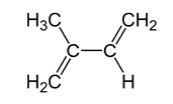 | 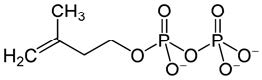 |
| Figure 1. Isoprene Unit | Figure 2. Isopentenyl pyrophosphate |
The actual mechanisms for the synthesis of terpenes are derived from units of isopentenyl pyrophosphate (Figure 2). The two metabolic pathways to synthesize terpenes are the mevalonic acid pathway (MVA) or the MEP/DOXP pathway. The pathways are usually exclusive to the type or organism with green algae producing terpenes via the MEP pathway; humans & fungi via the MVA pathway and plants producing terpenes from both pathways(1).
In biological processes, there are essential and nonessential terpenes. Essential terpenes are usually terpenes C15 and higher which are required by the plant, insect or algae to support life and growth. The lower weight terpenes (some C15 and below) are nonessential terpenes which assist in other biological processes or contribute to the defense and functioning of the organism but are not critical to survival. Removal of an essential terpene will damage and ultimately kill the organism, whereas the removal of a nonessential terpene will not.
Terpenes are classified based on the number of isoprene units they contain. Starting with hemiterpenes that have five carbons; monoterpenes have ten carbons, sesquiterpenes have 15 carbons, etc. (Table 1). The classification is based on the C5 rule which is the isoprene synthesis route that organisms employ for the production of terpenes.
Table 1. Terpene Groups and Examples
| Terpene Group | # Isoprene Units | # Carbons | Terpene Example | Terpenoid Example | Notes |
| Hemiterpene | 15 | 5 | Isoprene | Isovaleric acid | Isoprene is the only hermiterpene |
| Monoterpene | 2 | 10 | Limonene | Terpineol | Large group of volatile and semivolatile compounds |
| Sesquiterpene | 3 | 15 | Humulene | Farnesol | Large group of volatile and semivolatile compounds |
| Diterpenes | 4 | 20 | Taxadiene | Cafestol | Precursor compounds for production of retinol and retinal |
| Sesterterpenes | 5 | 25 | Ophiobolin A | Geranylnerolidol | Rare group of terpenes mostly from marine sources |
| Triterpenes | 6 | 30 | Squalene | Sterols | Squalene is shark liver oil and the precursor to some steroids |
| Sesquarterpenes | 7 | 35 | Tetraprenylcurcumene | Ferrugicadiol | Mostly produced by microbes |
| Tetraterpenes | 8 | 40 | Lycopene | Cartenoids | Family also includes carotenes |
Monoterpenes are lower molecular weight terpenes and are responsible for lighter floral fragrances. These lighter weight terpenes can volatilize quickly during processing involving heat and decarboxylation. Sesquiterpenes are larger molecular weight terpenes and have a heavier fragrance, such as sandalwood or musk, and volatilize at higher temperatures and remain after many processing steps.
Table 2. Terpene and Terpenoid Groups Found in Cannabis
| Terpene Group | Subgroup | MW | BP | Formula | Abundance in Cannabis | Aroma | Cannabis Variant Example |
| Myrcene | Monoterpene | 136.2 | 168 ℃ | C10H16 | High ppm - % | Clove-like, musky, earthy | Levorin 110, Skunk XL |
| Terpinolene | Monoterpene | 136.2 | 187 ℃ | C10H16 | High ppm - % | Pine with herbal and floral notes | Pineapple Jack, Durban Poison |
| Pinenes (alpha and beta) | Monoterpene | 136.2 | 156 ℃ | C10H16 | High ppm - % | Pine | Bubba Hash, Strawberry Cough |
| beta-Caryophyllene | Sesquiterpene | 204.4 | 264 ℃ | C15H24 | High ppm - % | Citrus | Gorilla Glue, Skywalker |
| Limonene | Mononterpene | 136.2 | 176 ℃ | C10H16 | ppm | Lemon, citrus | Lemon Haze, OG Kush |
| Ocimene | Mononterpene | 136.2 | 100 ℃ | C10H16 | ppm | Herbal | White Fire OG, Purple Haze |
| Humulene | Sesquiterpene | 204.4 | 107 ℃ | C15H24 | ppm | Hoppy | Sour Diesel, Pink Kush |
| Phellandrenes | Mononterpene | 136.2 | 172 ℃ | C10H16 | ppm | Citrus and mint | Super Lemon Haze, Super Silver Haze |
| Linalool | Mononterpene Alcohol | 154.2 | 199 ℃ | C10H18O | ppm | Lavender and floral | Sour OG |
| Camphene | Mononterpene Alcohol | 136.2 | 159 ℃ | C10H16 | ppm – ppb | Damp mint, pine notes | Indica Species |
| Terpineol | Mononterpene Alcohol | 154.3 | 271 ℃ | C10H18O | ppm – ppb | Floral | Girl Scout Cookies, OG Crush |
| Carenes | Mononterpene | 136.2 | 172 ℃ | C10H16 | ppm – ppb | Pungent, earthy sweet | Super Silver Haze, Skunk #1 |
The most common terpenes found in cannabis variants are myrcene, caryophyllene and many others (Table 2). Current research is investigating the possible synergistic effects of cannabinoids and terpenes. Research has suggested the presence of terpenes in cannabis products can alter the pharmacokinetics of cannabinoids (2,3). There are still questions being researched as to which cannabis product could contain these healthful or synergistic effects. The growing popularity of cannabis-derived products, especially the increasing popular vapes, are now bringing different groups and sources of terpenes into the cannabis world.
In the world of cannabis products, terpenes within the product can be either cannabis-derived, other botanically-derived, or artificial (synthetic). Products where flavor and fragrance are heavily dependent, such as in vapes, concentrates and oils, some manufacturers will supplement or add other sources of terpenes to create a characteristic smell or taste especially when the extraction processes for some of these products can strip away many naturally cannabis-derived compounds. This process becomes more common for cannabis products, the questions arise if the added compounds are safe. In a 2015 study of e-cigarette flavor and fragrance additives by Allen et al. it was found that some of the added compounds were changing during heating and vaporization into other harmful compounds.
Sample Processing and Analysis for Terpenes
Cannabis compounds can be degraded by high temperatures and oxidation. In ambient temperature grinding processes, heat and energy are generated which can raise the temperature of materials to almost 100 ºC and cause up to a 60% loss of critical aromatic components (4,5). Reduction of temperature during processing can prohibit the breakdown of volatile compounds. In one study it was found that cryogenic conditions showed better retention of monoterpenes (myrcene, limonene and pinene) than grinding at ambient temperature (6,7).
The extraction and analysis of terpenes in the analytical laboratory from the various cannabis product matrices can be challenging, especially in regard to sample preparation, clean-up and matrix effects. In many cases, related terpenes have the same or similar masses (Table 2) making them difficult to identify in complex mixtures where many isomers or similar compounds are present. The most common method of analysis for terpenes is gas chromatography (GC) with either a flame ionization detector (FID) or mass spectrometer (MS).
The principle of gas chromatography is that samples are vaporized in an inlet at high temperatures of usually over 250 ºC and transported via a carrier gas to a chemically infused column. The column material is composed of various chemical binding groups which interact with the vaporized analytes forcing the analytes out of the column phase over time and increasing temperature until the analytes are released into the carrier gas then detected. The result is a chromatogram which displays graphical responses over time when each analyte is detected. Many GCMS column chemistries are based on boiling point or molecular size, meaning that molecules of similar weight or similar boiling points could co-elute or appear overlapped in the chromatogram. Is it this fact which can make the analysis of terpenes challenging since many terpenes have the same molecular weight and formula and relatively low boiling points, which mean they appear very quickly in the chromatogram and often co-elute (Table 2). Instrument and column manufacturers over the decades have become the experts on the separation of compounds and have given analytical labs many methods and specialized columns to aid in analysis.
Table 3. Example of CertiPrep CAN-TERP-MIX GC/MS Instrument Conditions
| Instrument conditions |
| Column | DB-624 UI column |
| Size | 30 m x 0.25 mm diameter |
| Program | 50 C x 3-minute hold; 15 C/min ramp to 240; hold 20 minutes |
| Injection Volume | 1 μL |
For an in-depth look at terpenes, please read “Beyond Potency: The Importance of Terpenes” (8) in the June, 2019 issue of Cannabis Science and Technology Magazine.
References
1. ”Terpene.” In Wikipedia, March 27, 2019. https://en.wikipedia.org/w/index php
2. John M. McPartland DO, MS, and Ethan B. Russo MD. “Cannabis and Cannabis Extracts.” Journal of Cannabis Therapeutics 1, no. 3–4 (June 1, 2001): 103–32. https://doi.org/10.1300/J175v01n03_08.
3. Russo, Ethan B. “Taming THC: Potential Cannabis Synergy and Phytocannabinoid-Terpenoid Entourage Effects.” British Journal of Pharmacology 163, no. 7 (August 2011): 1344–64. https://doi.org/10.1111/j.1476-5381.2011.01238.x.
4. Singh, K.K., and T.K. Goswami. “Design of a Cryogenic Grinding System for Spices.” Journal of Food Engineering 39 (March 1, 1999): 359–68. https://doi.org/10.1016/S0260-8774(98)00172-1.
5. Saxena, Shailendra, Yugal Sharma, S S. Rathore, Kaushalendra Singh, Pradyuman Barnwal, Rohit Saxena, Payal Upadhyaya, and M M. Anwer. “Effect of Cryogenic Grinding on Volatile Oil, Oleoresin Content and Anti-Oxidant Properties of Coriander (Coriandrum Sativum L.) Genotypes.” Journal of Food Science and Technology 52 (January 1, 2013). https://doi.org/10.1007/ s13197-013-1004-0.
6. Mary Mathew, Santhi, and Sreenarayanan V .V. “Study on Grinding of Black Pepper and Effect of Low Feed Temperature on Product Quality.” J. Spices Aromatic Crops 16 (January 1, 2007).
7. Murthy, C.T., and Suvendu Bhattacharya. “Cryogenic Grinding of Black Pepper.” Journal of Food Engineering 85, no. 1 (March 2008): 18–28. https://doi.org/10.1016/j.jfoodeng.2007.06.020.
8. P. Atkins, Cannabis Science and Technology 2(3), 22-27 (2019) – Excerpts used for technical note.
Related Articles
The Botanicals Workflow and Temperature Control
Pesticide Extraction Using QuEChERs and SPE Method
Principles of Sample Preparation by Grinding or Comminution
Solvent Extraction Method of Plants Using Ethanol
Winterization


